A remarkable piece of naval history is set to make waves at a Richard Winterton Auctioneers.

The silver plate of Admiral Sir Cloudesley Shovell, recovered from one of Britain’s most catastrophic maritime disasters, will go under the hammer at Richard Winterton Auctioneers in Lichfield on Monday, October 27.
The 18th century naval commander, as celebrated in his era as Lord Nelson would later become, perished alongside 1,342 souls when HMS Association and three other vessels struck the treacherous rocks off the Isles of Scilly in 1707.
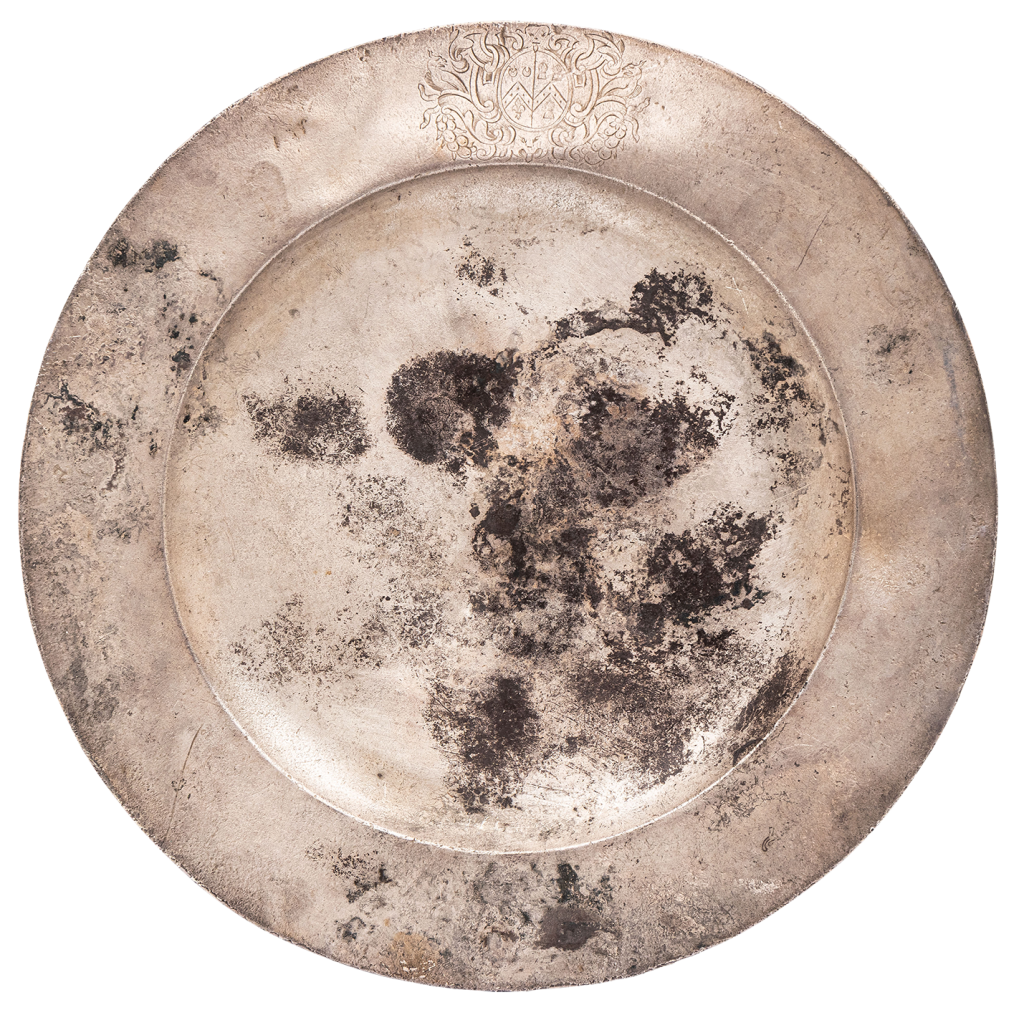
Discovered in the 1970s by a Birmingham diver, this Queen Anne silver plate bears Sir Cloudesley’s coat of arms engraved on its rim. It’s one of only two known examples. The other was sold decades ago to Rochester Town Hall, where the admiral once served as Member of Parliament.
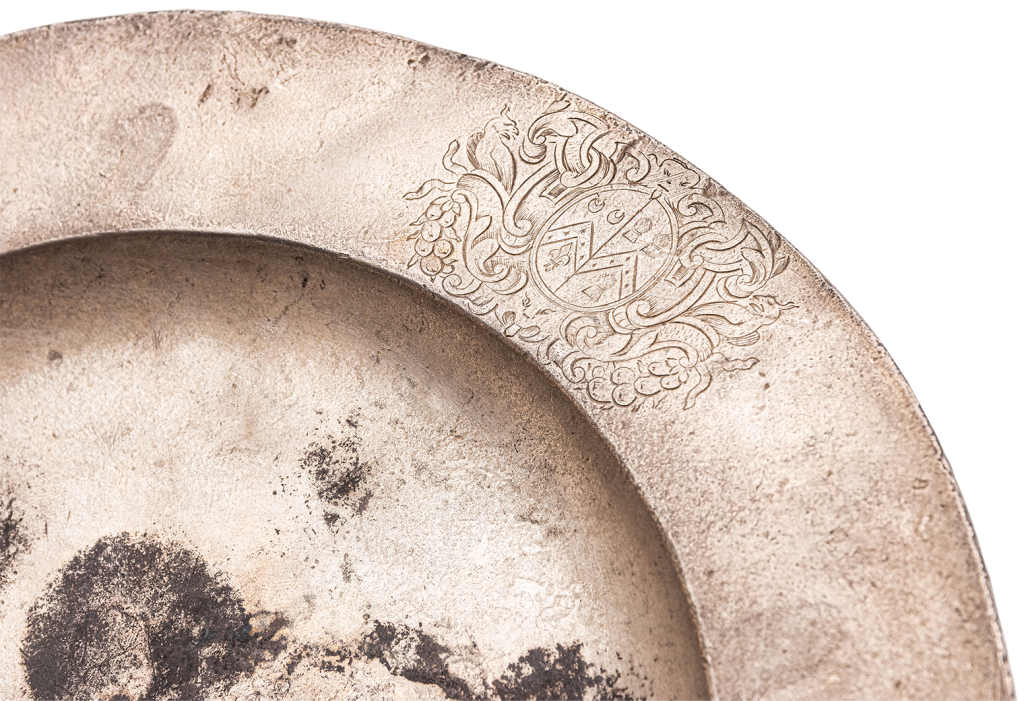
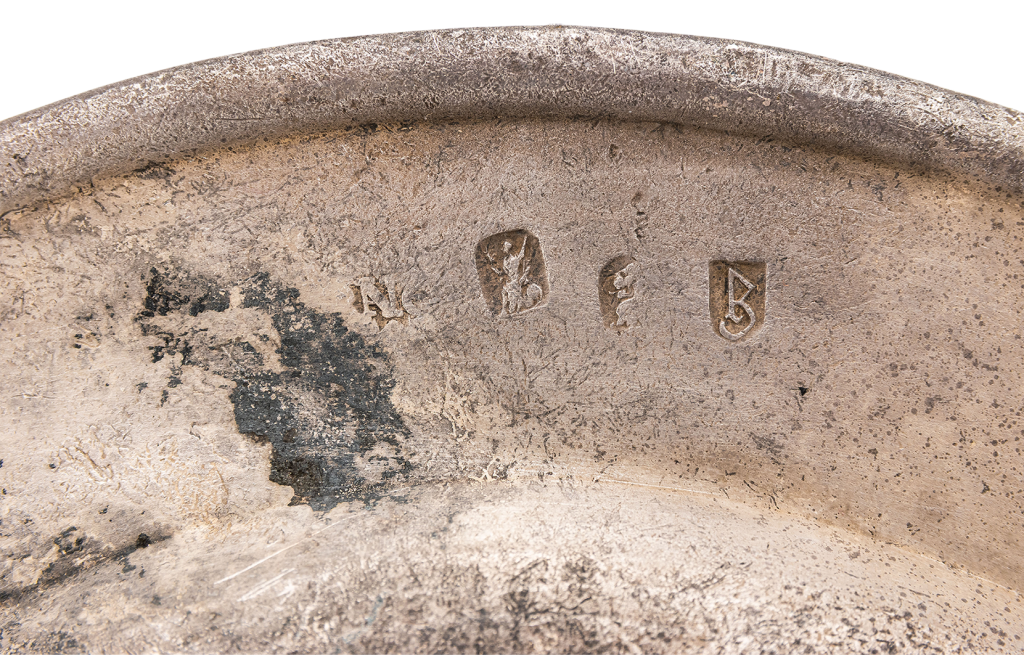
The 24cm diameter plate, hallmarked for Anthony Nelme, London 1703, weighs 513.8 grams and carries a guide price of £600 to £800. Despite spending over 250 years beneath the waves, the piece remains in relatively good condition, though tarnished, dented and distorted by its ordeal.
The hallmarks on the underside are remarkably clear, suggesting it was submerged that side down. Perhaps it was from this very plate the admiral was served what turned out to be his last meal before disaster struck. – Philip Bridge, Richard Winterton Auctioneers
HMS Association, a 90-gun Royal Navy flagship launched at Portsmouth in 1697, was returning from Gibraltar in October 1707 when tragedy struck. Without accurate means of determining longitude, sailors relied on ‘dead reckoning’, a navigational method that couldn’t account for currents and wind.
On the evening of October 22, 1707, the fleet ran into the Western Rocks off Scilly. Three ships (Association, Eagle and Romney) sank within minutes. A fourth vessel, Firebrand, struck the rocks but was lifted off by a wave before foundering in Smith Sound. Only one person from the Romney reportedly survived.
Sir Cloudesley’s body, along with that of his greyhound Mumper, mysteriously washed ashore at Porth Hellick on St Mary’s, seven miles from the wreck site. His two stepsons, the captain of the Association, and other high ranking officers also perished, their bodies coming ashore on St Mary’s.
The disaster sparked national outrage and eventually led to the Longitude Act of 1714. This parliamentary initiative culminated in John Harrison’s marine chronometer in 1759, finally enabling sailors to calculate longitude accurately.
Sir Cloudesley was temporarily buried in sand before Queen Anne ordered his reburial at Westminster Abbey, cementing his status as a national hero. The tragic event spawned numerous tales, including the gruesome (though likely apocryphal) story of a local woman who allegedly discovered the admiral barely alive and murdered him for his rings.
Regardless of these bloodthirsty tales, the story remains one of catastrophic loss underlining the perils of seafaring in the 18th century.
The plate will be sold at The Lichfield Auction Centre, Wood End Lane, Fradley Park, WS13 8NF, in the Antique & Home Sale on Monday, October 27, starting at 9am.
Viewing takes place on Friday, October 24, between 10am and 4pm. The catalogue goes live one week prior at www.richardwinterton.co.uk/auctions/auction-calendar.
For valuations or enquiries, email office@richardwinterton.co.uk or call 01543 251081.
A piece of history that spent centuries beneath the waves now offers collectors a tangible connection to one of Britain’s darkest maritime chapters.

